



Introdução
Poucos eventos conseguem unir tantas pessoas quanto a Copa do Mundo. A cada quatro anos, bilhões de torcedores acompanham partidas que entram para a história, torcem por seus países e conhecem novas culturas através do futebol. Nesta semana, vamos explorar como surgiu a Copa do Mundo, descobrir curiosidades sobre o maior torneio esportivo do planeta e entender por que o futebol se tornou uma linguagem universal.
📖 Aqui você encontra…
⚽🏆The FIFA World Cup: More Than Just a Football Tournament
The Birth of the World’s Biggest Sporting Event
 Every four years, billions of people stop what they are doing to watch one event: the FIFA World Cup. More than just a football tournament, the World Cup has become one of the largest celebrations of sport, culture, and international friendship.
The first FIFA World Cup took place in Uruguay in 1930. Organized by FIFA, the tournament brought together only thirteen national teams. Although it was much smaller than today’s competition, it marked the beginning of an event that would eventually become one of the most watched spectacles on Earth.
Since then, the tournament has grown enormously. Today, dozens of countries compete in qualifying matches for years, hoping to earn one of the coveted places in the final competition.
Why Football Became the World’s Favorite Sport
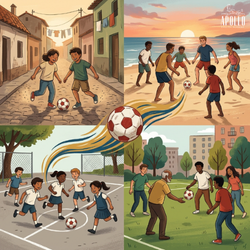 Football is often called “the world’s game,” and for good reason. Unlike many sports, football requires very little equipment. A ball and an open space are often enough for people to play, making the sport accessible almost everywhere.
Its simple rules also make it easy for children and adults to enjoy. Whether in large stadiums, city parks, beaches, schools, or neighborhood streets, football brings people together regardless of language, culture, or background.
The World Cup represents the highest level of this global passion. It is one of the few events capable of capturing the attention of nearly every country at the same time.
The Most Successful National Teams
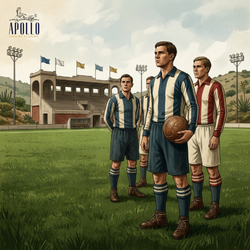 Some countries have built legendary histories in the tournament.
Brazil holds the record for the most FIFA World Cup titles, having won the competition five times. The Brazilian national team has become famous for its creative style of play and for producing some of football’s greatest talents.
Germany and Italy have also enjoyed remarkable success, each winning multiple championships through disciplined teamwork and tactical excellence.
Argentina has written unforgettable chapters in World Cup history as well, with victories led by legendary players from different generations.
Other nations such as France, Spain, England, and Uruguay have also lifted the famous trophy, each leaving its own mark on football history.
Legendary Players Who Changed Football
Every World Cup creates new heroes, but a few players have become true legends.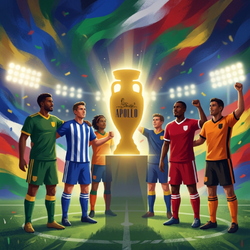
Pelé remains one of the greatest footballers of all time. Remarkably, he won his first World Cup at just seventeen years old and remains the only player to win three World Cups.
Diego Maradona became famous for his extraordinary talent and for leading Argentina to victory in 1986. His performances remain some of the most celebrated in football history.
More recently, players such as Lionel Messi and Cristiano Ronaldo have inspired millions of fans worldwide. Although they represent different countries, both have helped define modern football through their incredible consistency, records, and dedication.
The World Cup has also introduced unforgettable stars like Zinedine Zidane, Ronaldo Nazário, Ronaldinho, Kylian Mbappé, and many others who have left lasting legacies.
Memorable Moments in World Cup History
Some World Cup moments have become part of global culture.
The dramatic final between Italy and Brazil in 1994, decided by penalty kicks, remains unforgettable for many fans.
The 2010 tournament introduced the famous South African vuvuzelas, whose unique sound became one of the competition’s symbols.
In 2014, Germany defeated Brazil 7-1 in one of the most surprising matches ever played, a result that shocked football fans around the world.
More recently, the 2022 final between Argentina and France has already been called one of the greatest football matches ever played because of its excitement, dramatic twists, and unforgettable performances.
More Than a Competition
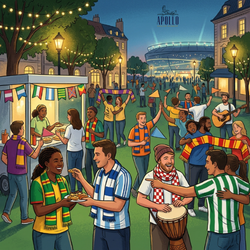 The FIFA World Cup is not only about winning matches. It also encourages cultural exchange between countries.
Millions of fans travel to host nations, discovering new traditions, foods, languages, and customs. Television broadcasts allow people from every continent to experience these celebrations together.
For many children, the tournament is their first opportunity to learn about geography, flags, national anthems, and cultures beyond their own country.
Sport has a unique ability to create moments of unity, even between nations that are very different from one another.
Learning English Through Football
Football offers an excellent opportunity to practice English.
Sports commentators use natural, fast-paced language filled with useful vocabulary, expressions, and idioms. Interviews with players and coaches expose learners to different accents from around the world.
Many football fans also follow international news, documentaries, podcasts, and social media in English. This creates an authentic learning experience where vocabulary is connected to something students genuinely enjoy.
Whether you support Brazil, Argentina, England, France, or any other team, football reminds us that language, like sport, has the power to connect people across cultures.

Get to know Apollo?
Gostou de aprender inglês através do esporte? Na Apollo Academy, acreditamos que os melhores aprendizados acontecem quando o idioma está conectado aos nossos interesses. Continue acompanhando nossos textos semanais e descubra como história, cultura, ciência, música, cinema e até futebol podem transformar o inglês em uma experiência muito mais natural e divertida!