

Introdução
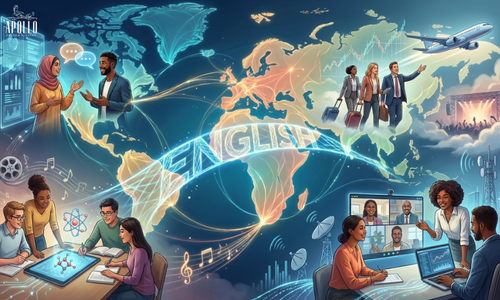
Você já parou para pensar por que o inglês está presente em praticamente todos os lugares? Seja em filmes, músicas, videogames, tecnologia, ciência ou viagens, o idioma se tornou uma ferramenta de comunicação global. Mas isso não aconteceu por acaso. Nesta semana, vamos descobrir como o inglês alcançou esse status, conhecer fatos curiosos sobre sua história e entender por que aprender esse idioma abre tantas portas no mundo moderno.
📖 Aqui você encontra…
Why Is English the Global Language?
A Language That Traveled the World
 Today, English is spoken by more than 1.5 billion people worldwide, either as a native language or as a second language. It is the most widely learned language on Earth and has become the preferred language for international communication.
However, English did not become a global language overnight. Its journey began many centuries ago, when Germanic tribes such as the Angles, Saxons, and Jutes settled in Britain during the fifth century. Their languages gradually mixed with Latin, Norse, and later French, creating what would eventually become Modern English.
Over time, English continued to evolve, borrowing thousands of words from many different cultures. This rich history explains why English vocabulary is so large and diverse today.
The British Empire and the Spread of English
One of the biggest reasons English spread across the world was the growth of the British Empire. 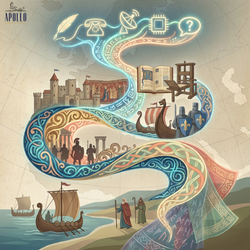
During the eighteenth and nineteenth centuries, Britain established colonies in North America, Africa, Asia, and Oceania. As British influence expanded, so did the English language.
Many countries adopted English in government, education, trade, and law. Even after many colonies gained independence, English remained an important language for communication between people from different linguistic backgrounds.
Today, countries such as India, Nigeria, South Africa, Australia, New Zealand, and Canada continue to use English in many official and educational contexts.
The Rise of the United States
During the twentieth century, another factor helped English become even more influential: the rise of the United States as an economic, scientific, technological, and cultural superpower.
Hollywood movies, television shows, popular music, and later the internet introduced English to billions of people around the world.
Companies such as Apple, Microsoft, Google, Netflix, Amazon, and many others produce content primarily in English, making the language part of everyday life even for people who have never visited an English-speaking country.
The Language of Science, Business, and Technology
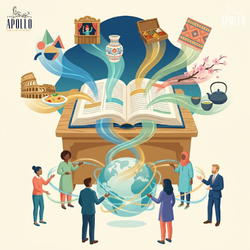 Today, English serves as the international language in many professional fields.
Scientists publish most research papers in English so they can be read by colleagues around the world. International conferences, academic journals, and university programs frequently use English as their primary language.
Business professionals also rely on English when working with international clients or multinational companies. Pilots and air traffic controllers communicate in English regardless of their nationality, making air travel safer and more efficient.
In technology, programming languages, software documentation, and artificial intelligence are heavily based on English vocabulary, which explains why many technical terms remain untranslated.
English in Everyday Life
Even people who do not actively study English encounter the language every day.
Song lyrics, movie titles, smartphone apps, video games, social media platforms, and advertisements often include English words and expressions.
Many international sporting events, award ceremonies, and entertainment programs are also conducted partly or entirely in English.
Because of this constant exposure, learners often recognize words long before they begin formal language classes.
Interesting Facts About English
One fascinating aspect of English is its enormous vocabulary. The Oxford English Dictionary contains hundreds of thousands of words, and new ones are added every year.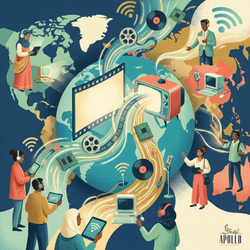
English also borrows vocabulary from countless other languages. Words like “piano” come from Italian, “robot” from Czech, “shampoo” from Hindi, and “karaoke” from Japanese.
Another interesting fact is that there is no single “correct” English accent. British, American, Canadian, Australian, Irish, South African, and many other varieties are all considered correct forms of the language.
This diversity makes English a truly international language rather than the property of any one country.
Why Learning English Matters
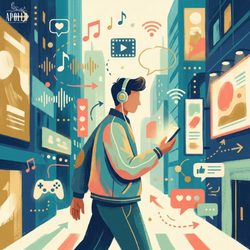 Learning English is no longer only about traveling abroad.
It provides access to better educational opportunities, international careers, scientific knowledge, entertainment, and friendships with people from different cultures.
English allows students to read books in their original language, watch films without subtitles, understand podcasts, participate in online communities, and communicate confidently with people from almost anywhere in the world.
Perhaps the greatest strength of English is that it connects people. Although cultures remain wonderfully different, language creates bridges that make cooperation, understanding, and friendship possible.
For that reason, English has become much more than just another school subject. It has become one of the most valuable skills anyone can develop in today’s interconnected world.
Get to know Apollo?
Agora que você conhece a incrível trajetória do inglês pelo mundo, fica mais fácil entender por que aprender esse idioma é um investimento para a vida toda. Na Apollo Academy, acreditamos que aprender inglês vai muito além da gramática: é compreender culturas, acessar conhecimento e criar oportunidades. Continue acompanhando nossos conteúdos semanais e descubra como cada tema pode ampliar não apenas seu vocabulário, mas também sua visão de mundo