



Introdução
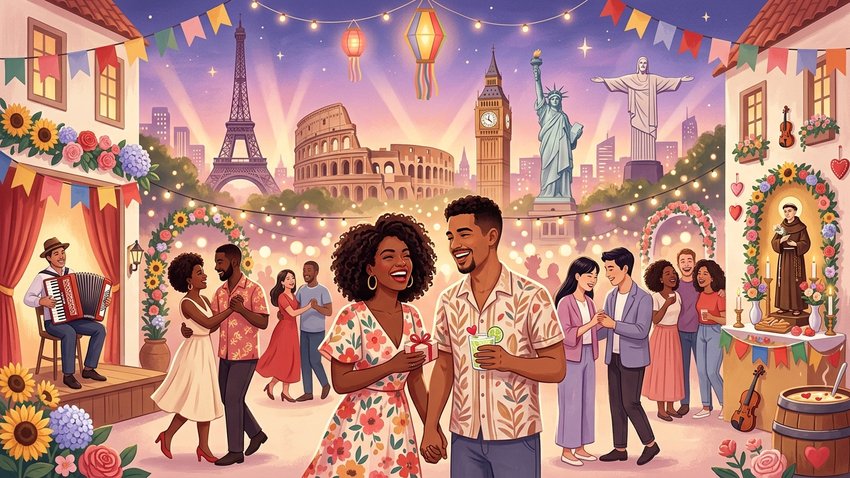
O amor é um tema universal, mas as formas de celebrá-lo variam bastante ao redor do mundo. Enquanto muitos países comemoram o Valentine’s Day em fevereiro, os brasileiros celebram o Dia dos Namorados em junho. Nesta semana, vamos descobrir a origem dessa diferença, explorar como o amor aparece na música, no cinema e na cultura popular, e aprender curiosidades que tornam essa data ainda mais interessante.
📖 Aqui você encontra…
Love Around the World: Understanding Brazil’s Valentine’s Day
 Why Is Valentine’s Day Different in Brazil?
Many people are surprised to learn that Brazil does not celebrate Valentine’s Day on February 14th like the United States, Canada, and many European countries.
Instead, Brazilians celebrate Dia dos Namorados on June 12th. The reason is connected to Saint Anthony, whose feast day is celebrated on June 13th. Saint Anthony is traditionally known in Brazil as the “matchmaker saint,” and over time the day before his celebration became associated with romance and relationships.
The modern version of Dia dos Namorados was also promoted in the 1940s by advertisers looking to encourage gift-giving during a period with relatively low commercial activity.
The Origins of Valentine’s Day
The February celebration has much older roots. Valentine’s Day is traditionally linked to Saint Valentine, a figure whose story became associated with love and romance over the centuries.
Although historians debate the exact details of Saint Valentine’s life, the holiday gradually evolved into a celebration of affection, cards, flowers, and romantic gestures.
Today, Valentine’s Day is celebrated in many countries, though traditions vary considerably from place to place.
 Love in Popular Culture
Love is one of the most common themes in popular culture. Movies, books, songs, and television shows frequently explore romance because it is an experience that people everywhere can understand.
Classic romantic stories such as Titanic and The Notebook have become cultural landmarks, while countless novels and series continue to reinvent the idea of love for new generations.
These stories help shape expectations, traditions, and even the language people use to express affection.
Famous Love Songs and Their Stories
Music has always played a special role in celebrating love. Some romantic songs have become so iconic that they remain popular decades after their release.
Songs such as Can’t Help Falling in Love, All You Need Is Love, and Perfect are recognized around the world.
Many of these songs became cultural symbols because their themes are universal. They speak about connection, hope, commitment, and emotion in ways that transcend language and national borders.
Curious Traditions Around the World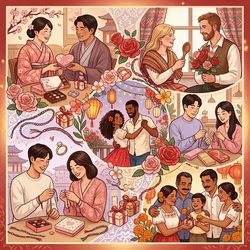
Different countries celebrate love in unique ways. In Japan, for example, women traditionally give chocolates on Valentine’s Day, while men return the gesture a month later on White Day.
In South Korea, multiple romantic celebrations occur throughout the year. Some countries focus on friendship as much as romance, while others emphasize family relationships.
These differences show how a universal feeling can be expressed through many different cultural traditions.
Why This Topic Matters for English Learners
Love is one of the most common themes in English-language media. Learning vocabulary related to relationships, emotions, and personal experiences helps students understand songs, movies, books, and everyday conversations.
Because the topic is familiar and emotionally engaging, it also makes practicing English more natural and memorable.
Get to know Apollo?

Gostou de aprender inglês através de temas culturais que fazem parte da nossa vida? Na Apollo Academy, acreditamos que aprender um idioma vai muito além da gramática. É entender histórias, tradições e as diferentes formas como as pessoas se expressam ao redor do mundo. Continue acompanhando nossos conteúdos e descubra novas maneiras de aprender inglês de forma leve, interessante e significativa!