


Introdução
Alguns escritores mudam a literatura. Outros mudam a forma como enxergamos o mundo. Franz Kafka fez as duas coisas. Mesmo tendo publicado poucas obras em vida, seu nome se tornou sinônimo de situações absurdas, burocracias intermináveis e sentimentos de ansiedade que continuam extremamente atuais. Nesta semana, vamos conhecer sua história, suas principais obras e entender por que, mais de um século depois, ainda falamos sobre o universo “kafkiano”.
📖 Aqui você encontra…
📚Franz Kafka: The Writer Who Changed Modern Literature
 A Quiet Man Who Became a Literary Giant
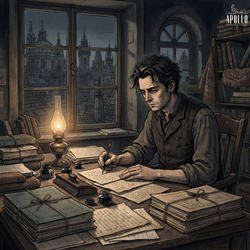
Franz Kafka was born in Prague in 1883, when the city was part of the Austro-Hungarian Empire. Although he is now considered one of the greatest writers of the twentieth century, Kafka lived a relatively quiet life and worked most of his career as an insurance officer.
Writing was his passion, but he often doubted the value of his own work. In fact, he published only a small number of stories during his lifetime and never experienced the worldwide fame he enjoys today.
Kafka wrote primarily in German, even though he lived in a multicultural city where several languages and cultures coexisted. This unique environment influenced many of his stories and contributed to their complex atmosphere.
The Books That Changed Literature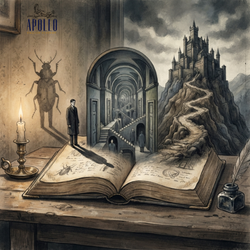
Today, Kafka is remembered for several extraordinary works.
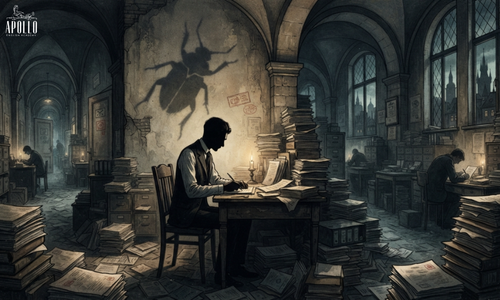
His most famous novel, The Metamorphosis, tells the story of Gregor Samsa, a traveling salesman who wakes up one morning transformed into a gigantic insect. Rather than focusing on fantasy, the story explores isolation, family expectations, guilt, and the loss of identity.
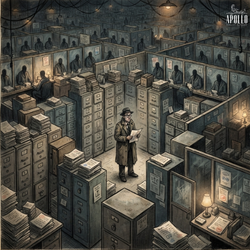
Another important novel is The Trial, in which a man is arrested without ever being told what crime he committed. The novel examines bureaucracy, justice, and the feeling of being powerless against systems that seem impossible to understand.
The Castle presents a similarly frustrating journey, following a land surveyor who struggles to gain access to mysterious authorities that constantly keep him waiting.
Although these stories may sound strange, they continue to resonate with readers because they explore emotions that many people experience in everyday life.
What Does “Kafkaesque” Mean?
Kafka’s influence became so significant that his name inspired an adjective: Kafkaesque.
Something is described as Kafkaesque when it feels confusing, absurd, oppressive, or controlled by complicated rules that make little sense. People often use this word to describe situations involving excessive bureaucracy, endless paperwork, or systems that seem impossible to navigate.
It is remarkable that very few writers have had such a lasting impact on everyday language.
 Why Kafka Still Matters
Many of Kafka’s themes remain surprisingly modern.
He wrote about anxiety, loneliness, social pressure, uncertainty, and the feeling of losing control over one’s own life. These ideas continue to appear in discussions about mental health, work environments, technology, and modern society.
His stories rarely provide easy answers. Instead, they encourage readers to ask difficult questions about identity, authority, freedom, and human existence.
Because of this, Kafka is studied not only in literature courses but also in philosophy, psychology, sociology, and political science.
Curious Facts About Franz Kafka
One fascinating fact is that Kafka asked his close friend, Max Brod, to destroy all of his unpublished manuscripts after his death.
Fortunately for literature lovers, Brod decided not to follow Kafka’s instructions. Instead, he organized and published many of the manuscripts that later became some of the most influential books ever written.
Another interesting curiosity is that the adjective “Kafkaesque” appears in dictionaries around the world, proving how deeply his work influenced global culture.
Despite writing more than one hundred years ago, Kafka’s books continue to inspire films, television series, theater productions, video games, and even discussions about artificial intelligence and modern bureaucracy.
Learning English Through Literature
Reading literature is one of the most effective ways to expand your English vocabulary.
Authors like Kafka expose readers to descriptive language, abstract ideas, and sophisticated sentence structures. Even simplified or adapted editions help learners improve reading comprehension while discovering one of history’s greatest writers.
His stories also encourage critical thinking, making English practice much more than memorizing grammar rules. Every page invites readers to interpret meanings, recognize symbolism, and explore language in context.

Get to know Apollo?
Gostou de conhecer um dos escritores mais influentes da literatura mundial? Na Apollo Academy, acreditamos que aprender inglês também significa descobrir grandes autores, entender diferentes culturas e desenvolver o pensamento crítico. Continue acompanhando nossos conteúdos semanais e perceba como a literatura pode transformar o aprendizado do idioma em uma experiência muito mais rica e inspiradora.