


Introdução
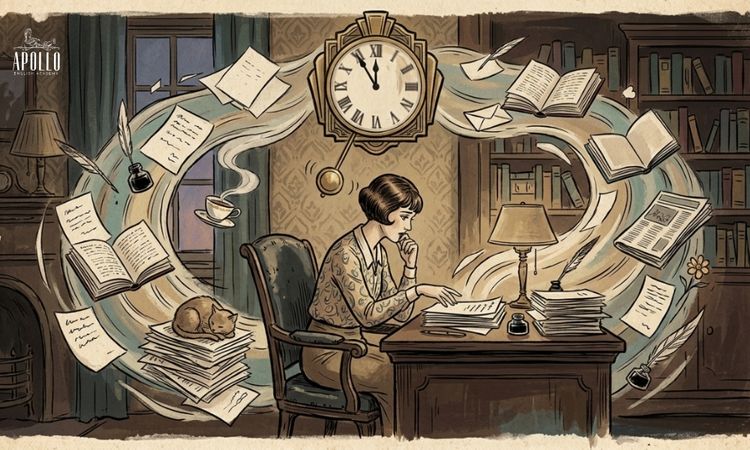
Você já adiou uma tarefa importante mesmo sabendo que precisava fazê-la? Se a resposta é “sim”, você não está sozinho! Nesta semana, vamos explorar por que procrastinamos, o que a ciência já descobriu sobre esse comportamento e como ele influencia nossa vida, nossos estudos e nosso trabalho. De quebra, você ainda vai aprender muito vocabulário novo em inglês enquanto descobre que a procrastinação é muito mais complexa do que simplesmente “ter preguiça”. 🧠⏳
📖 Aqui você encontra…
Procrastination: Our Daily Delay – Why We Keep Putting Things Off?
A Habit Almost Everyone Shares
 At some point, almost everyone has delayed doing something important. Maybe it was studying for an exam, cleaning the house, answering an email, or starting a big project. Instead, we often choose activities that are easier or more enjoyable, even when we know they are less important.
This behavior is called procrastination, and despite what many people believe, it is not simply a sign of laziness. Psychologists have discovered that procrastination is a complex human behavior influenced by emotions, motivation, habits, and the way our brains make decisions.
Why Does Our Brain Delay Important Tasks?
One of the biggest reasons people procrastinate is that the human brain naturally prefers immediate rewards over future benefits. Watching a funny video or checking social media provides instant satisfaction, while studying for an exam offers a reward that may only come days or weeks later.
Scientists explain this using the concept of present bias, which describes our tendency to value immediate pleasure more than future success. In other words, our brain sometimes chooses what feels good now instead of what will benefit us later.
Stress, fear of failure, perfectionism, and uncertainty can also make a task seem much bigger than it really is, causing us to postpone it even more.
Procrastination Through History
Although smartphones and social media receive much of the blame today, procrastination is far older than the internet.
Ancient Greek philosophers discussed the tendency to act against one’s better judgment. The philosopher Aristotle wrote about akrasia, a Greek word describing situations in which people know the right thing to do but choose something else instead.
Centuries later, famous writers, artists, and scientists also admitted struggling with procrastination. Even highly successful people have experienced moments when starting a task felt more difficult than completing it.
What Does Science Tell Us?
 Modern neuroscience shows that procrastination involves several parts of the brain.
The prefrontal cortex, responsible for planning and self-control, often competes with emotional systems that seek comfort and immediate pleasure. When emotions become stronger than self-control, delaying a task becomes much more likely.
Researchers also emphasize that procrastination is closely connected to emotional regulation. Many people postpone tasks not because they dislike the work itself, but because they want to avoid feelings such as anxiety, frustration, boredom, or self-doubt.
This means procrastination is often an emotional challenge rather than a time management problem.
Can Procrastination Ever Be Helpful?
Surprisingly, not all procrastination is harmful.
Some people practice what psychologists call active procrastination. Instead of avoiding work completely, they intentionally delay certain tasks because they perform better under pressure. However, this strategy only works for a small number of people and can easily become risky if deadlines are missed.
For most people, breaking large tasks into smaller steps and getting started as early as possible produces much better results.
Small Habits, Big Results
 Scientists agree that overcoming procrastination usually does not require dramatic changes.
Simple habits, such as working for just five minutes, removing distractions, creating realistic goals, and celebrating small achievements, can make difficult tasks feel much more manageable.
Many experts say that starting is often the hardest part. Once we begin, our brains frequently become more motivated to continue.
More Than Just Delaying
Procrastination affects students, professionals, artists, entrepreneurs, and even world leaders. It influences education, business, health, and productivity across the globe.
Understanding why we procrastinate helps us become more patient with ourselves and develop better strategies for facing challenges.
After all, procrastination is not about being lazy. It is about understanding how our minds work and learning how to work with them instead of against them.
Get to know Apollo?

Gostou de descobrir por que nosso cérebro adia tarefas importantes? Na Apollo Academy, acreditamos que aprender inglês também significa compreender melhor o comportamento humano, a ciência e os desafios do dia a dia. Continue acompanhando nossos conteúdos semanais e descubra como temas curiosos e relevantes podem transformar o aprendizado do idioma em uma experiência muito mais prática, interessante e enriquecedora.